Garbage Disposal & Kitchen Drain Maintenance
Prevent Disposal Clogs with Routine Kitchen Plumbing Maintenance
Regular use habits and periodic inspection help protect your Aurora kitchen plumbing.
Garbage disposals do not require annual certification, but routine kitchen plumbing maintenance is useful for properties with frequent use, recurring clogs, older drains, multiple tenants, or commercial kitchen activity.
| Task | Description | Typical Timing | Property Impact |
|---|---|---|---|
| Under-sink leak check | Inspect disposal, drain, trap, fittings, and dishwasher connection | Periodically | Helps identify water damage early |
| Drain performance review | Check for slow drainage, odors, gurgling, and backups | When symptoms appear | Helps prevent larger clogs |
| Disposal connection inspection | Review mounting, discharge pipe, and visible seals | During service visits | Supports reliable operation |
| Kitchen drain cleaning | Address buildup from food waste, grease, and debris | As needed | Helps reduce recurring clogs |
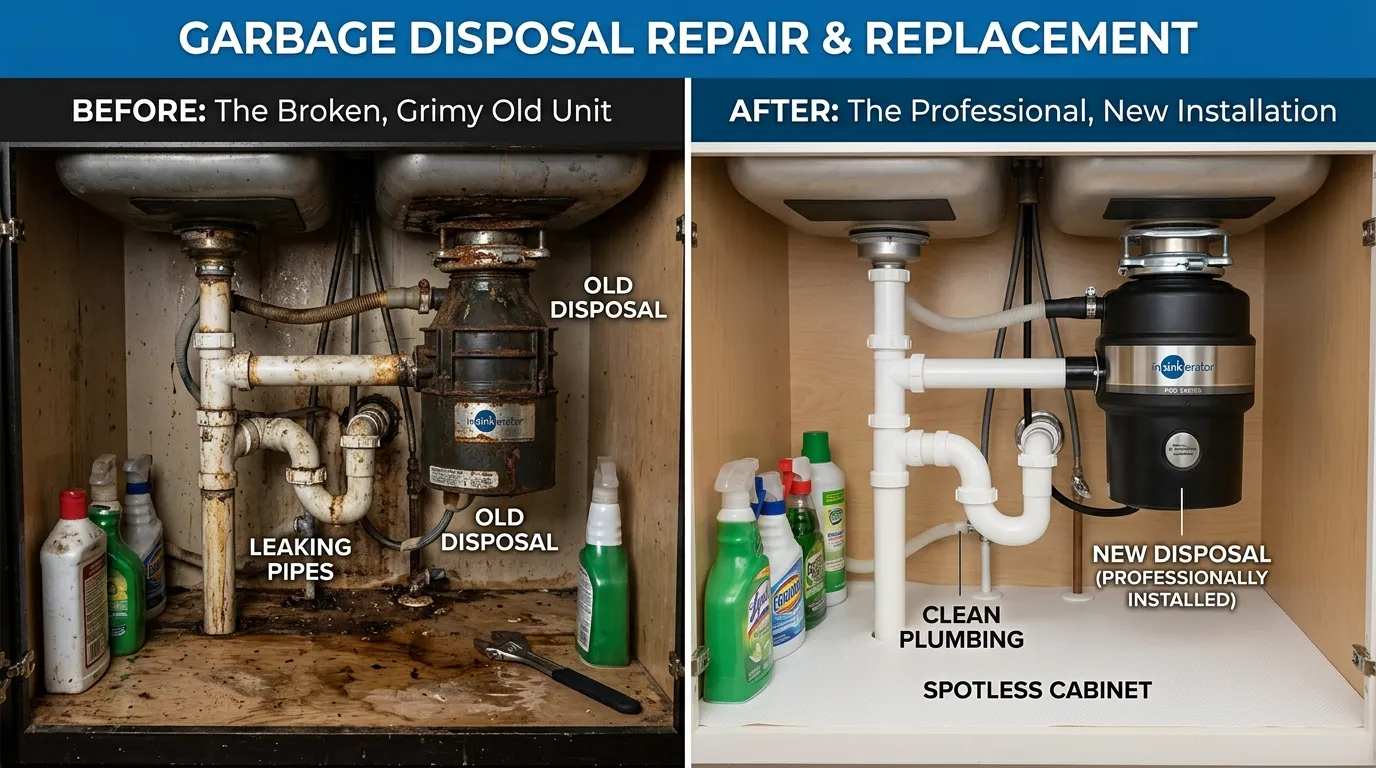
| Replacement planning | Assess old or leaking disposal units and damaged connections | When repairs become frequent | Supports reliable kitchen use |
Maintenance Tips
- Run cold water while using the disposal and briefly afterward.
- Avoid putting grease, oils, coffee grounds, fibrous produce, bones, large food scraps, and non-food items into the disposal.
- Never place hands or tools inside an energized disposal.
- Address repeated clogs or leaks before they affect cabinets and flooring.
- Schedule kitchen drain service if the sink drains slowly after disposal use.