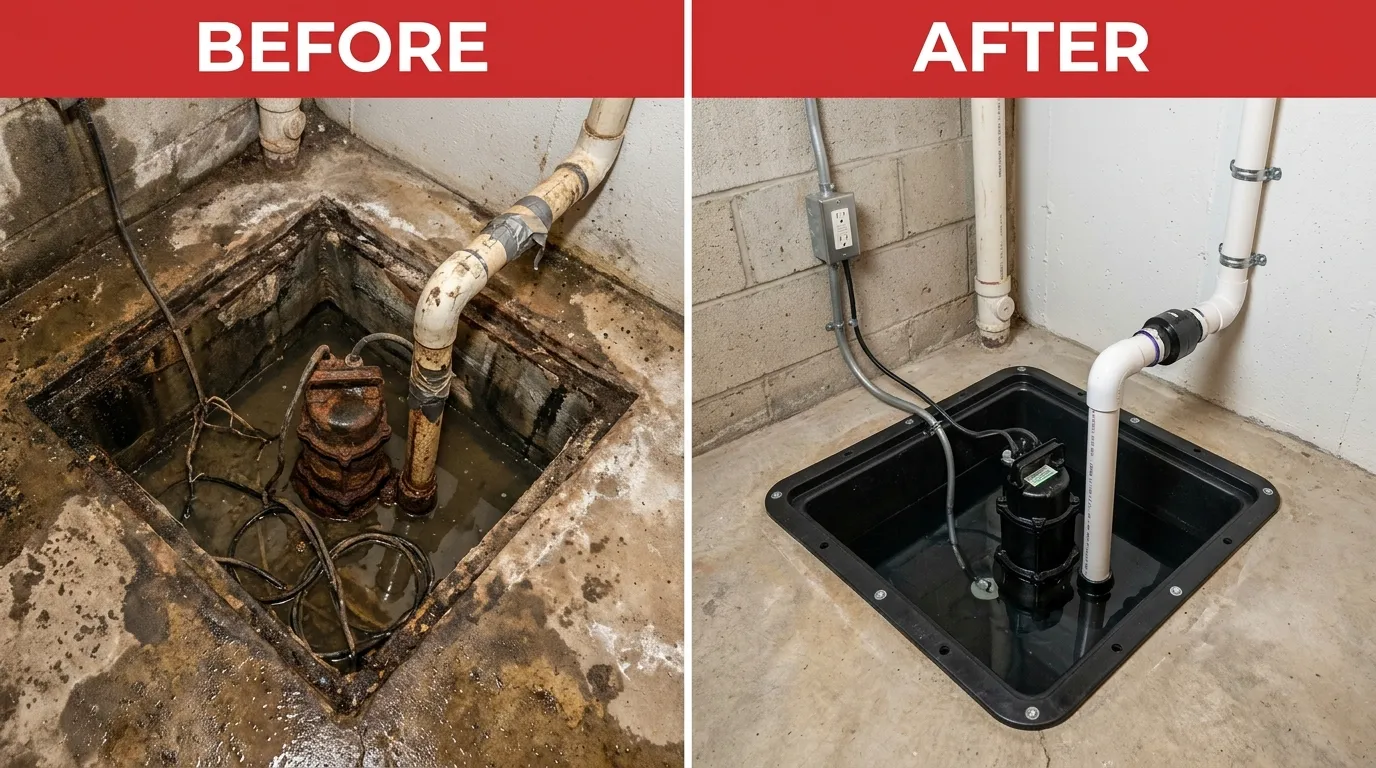
Routine Sump Pump Maintenance
Prevent Sump Pump Failure with Scheduled Maintenance in Aurora
Periodic checks help identify pump and discharge problems before water reaches your property.
Sump pumps do not require annual certification, but periodic inspection is valuable before wetter seasons, snowmelt, property turnover, or times when the pump is likely to be relied on heavily.
| Task | Description | Typical Timing | Property Impact |
|---|---|---|---|
| Pump operation test | Confirm the pump activates and removes water from the pit | Before wet seasons and as needed | Helps identify no-start conditions |
| Float-switch inspection | Check for obstruction, sticking, or unreliable activation | During maintenance | Supports automatic operation |
| Check-valve review | Evaluate whether water returns after pumping | During service | Helps prevent short cycling |
| Discharge-line inspection | Check accessible pipe for clogs, damage, freezing, or poor routing | Seasonally | Supports water movement away from building |
| Pit cleaning | Remove accessible debris that can affect intake or float movement | As needed | Helps pump operation |
| Backup-system review | Test battery or alarm systems where installed | Per manufacturer guidance | Supports outage readiness |
Maintenance Tips
- Test the pump before spring snowmelt and major weather periods.
- Keep the pit free of loose debris and do not block float movement.
- Make sure discharge piping is not frozen, crushed, disconnected, or blocked.
- Keep water away from the building foundation and avoid re-circulating discharge into the sump area.
- Replace weak backup batteries according to manufacturer instructions.
Cost Note: Sump pump repair and replacement cost depends on pump type, horsepower, pit condition, float and check valve, discharge route, backup system, access, electrical coordination, water damage, and property use.